

DIFC unveils plan to become world’s first AI-native financial centre
New initiative aims to generate $3.5bn and 25,000 jobs
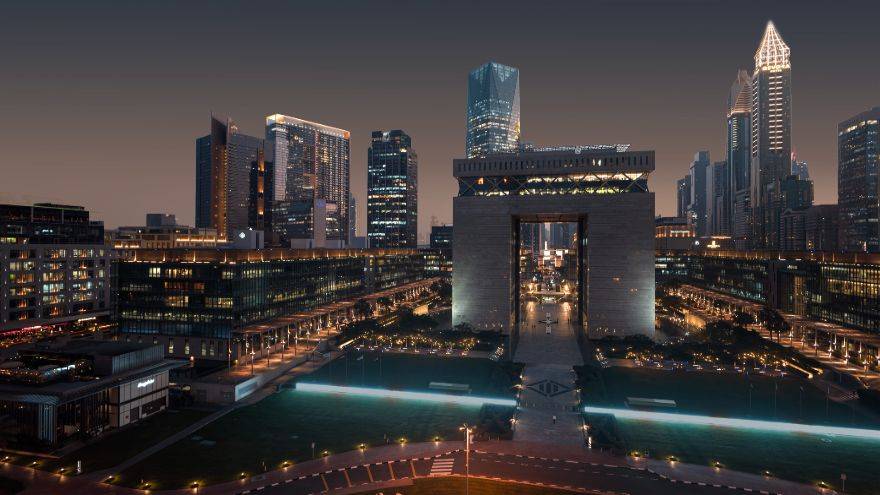
DUBAI – The Dubai International Financial Centre (DIFC) has announced plans to transform into the world’s first AI-native financial centre, embedding artificial intelligence at the core of its legal frameworks, business environment and physical infrastructure.
The move marks a significant step in Dubai’s ambition to position itself at the forefront of global financial innovation. It also signals a shift from experimental AI adoption to full-scale integration across an entire financial ecosystem.
While many financial hubs globally are exploring artificial intelligence through limited applications, DIFC is taking a more comprehensive approach. The Centre intends to evolve into a fully AI-native jurisdiction, where technology underpins regulatory systems, enterprise operations, talent development and urban design. Rather than deploying AI at the margins, the initiative places it at the centre of how the district operates.
AI strategy
The foundation for this transformation was laid in 2023 with the launch of a five-year artificial intelligence strategy. Since then, DIFC has introduced data governance policies and incorporated AI into its legal framework through Regulation 10 under the Data Protection Law. Artificial intelligence has already been deployed to support compliance processes and client relationship management, streamlining operations across the Centre.
Building on this groundwork, DIFC’s AI-native programme is expected to generate $3.5 billion (Dh12.9 billion) in economic value and create 25,000 jobs. The Centre’s relatively agile regulatory environment, combined with fewer legacy constraints than traditional financial hubs, is expected to accelerate implementation. Operating at scale across multiple sectors, DIFC aims to establish itself as a global benchmark for AI adoption in financial services.
Industry shift
As part of its expansion, DIFC will provide financial institutions with access to advanced AI tools designed to enhance operational efficiency and innovation. The Centre also plans to export AI governance solutions and trained talent to emerging markets across the Global South, extending its influence beyond the region.
A key component of the initiative is the development of a full-stack AI Campus. This will combine regulatory frameworks, training programmes, computing infrastructure and physical AI capabilities within a single ecosystem. The integration of robotics, autonomous mobility and digital twin technologies into financial regulation further distinguishes DIFC’s approach.
Within its legal and regulatory architecture, the Centre is preparing frameworks that address both human and machine-driven activities. These include governance models for AI agents and robotics, positioning DIFC at the forefront of responsible innovation. Across business operations, artificial intelligence will be embedded into workflows, compliance systems and financial services delivery, creating more automated and intelligent processes.
Talent drive
To support the transformation, DIFC is focusing on building a future-ready workforce capable of operating in a hybrid environment of human, AI and robotic collaboration. This includes executive education, regulatory training and technical certification programmes aimed at equipping professionals with the necessary skills.
The Centre aims to become a leading destination for AI-focused financial firms, with ambitions to surpass other top global financial centres in start-up density, venture capital attraction and unicorn creation. Its ecosystem will be supported by innovation hubs, accelerators and strategic partnerships designed to foster growth and collaboration.
Employees within DIFC Authority are already supported by specialised AI agents, which assist in areas such as governance, decision-making and client services. These tools are expected to be expanded further, enhancing productivity and improving the overall client experience.
Smart systems
At the infrastructure level, DIFC plans to evolve into a fully integrated smart district by 2030. A significant portion of its buildings will feature intelligent systems, supported by autonomous mobility solutions, service robotics and digital twin technologies. Thousands of sensors will be deployed to create a connected, data-driven urban environment.
These technologies will enable more efficient management of energy, maintenance and security, with certain operational functions carried out by robotic systems. The integration of physical and digital infrastructure is expected to form the backbone of DIFC’s AI-native ecosystem.
Dubai’s broader pro-innovation environment, advanced digital infrastructure and regulatory flexibility provide a strong foundation for this initiative. DIFC already hosts thousands of active companies, including banks, asset managers, FinTech firms and professional services providers, making it a central hub for financial activity across the Middle East, Africa and South Asia.
The Centre’s ambitions are aligned with the Dubai Economic Agenda D33 and the UAE’s national strategies in advanced technology. As part of this broader vision, DIFC will also host the Dubai AI Festival at Dubai World Trade Centre on 26 and 27 October 2026. The event is expected to attract more than 20,000 participants from over 100 countries, reflecting the growing global interest in artificial intelligence and its role in shaping the future of finance.